

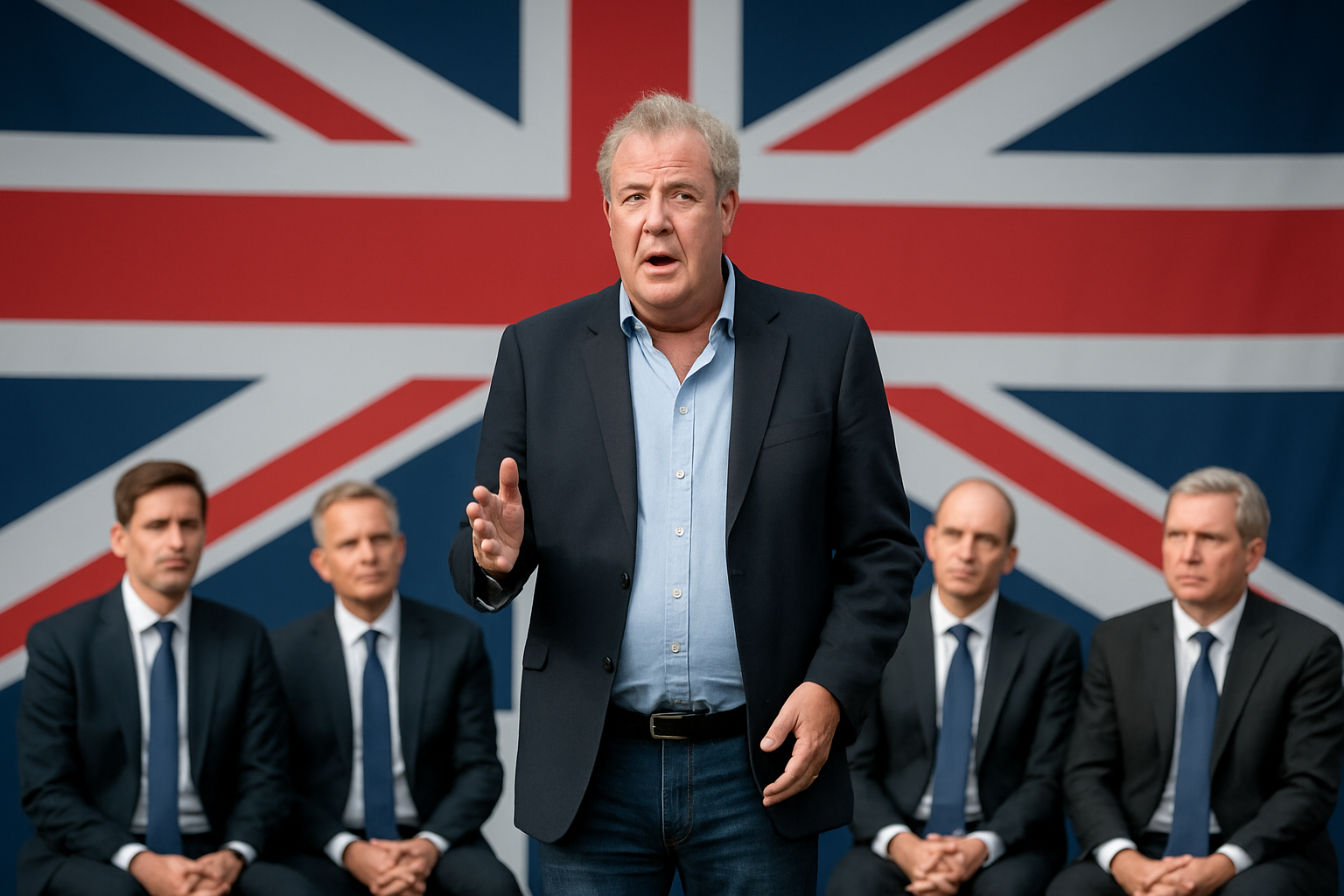
Jeremy Clarkson, the outspoken television presenter best known for Top Gear and The Grand Tour, recently sparked a political firestorm with a sharp attack on the Labour Party. The reaction was swift, but what surprised many observers was the chorus of support from senior business figures who defended Clarkson’s right to comment. This backing highlights a growing willingness among corporate leaders to engage publicly in political debate, especially as the United Kingdom approaches a pivotal election.
What prompted Clarkson’s criticism of Labour?
During a recent interview, Clarkson described Labour’s policies as “dangerous” and warned that a Labour government could jeopardise the country’s economic stability. He argued that the party’s tax proposals and regulatory agenda would deter investment and undermine the UK’s global competitiveness. While his remarks were framed in the familiar, blunt style that has defined his media career, they quickly moved beyond entertainment into the realm of political commentary.
Business community’s response
Within hours of Clarkson’s comments, a number of high‑profile CEOs and senior executives issued statements endorsing his viewpoint. They argued that the concerns raised about fiscal responsibility and regulatory burden were legitimate and deserved a platform in the public discourse. One senior executive described Clarkson as “absolutely bang on” for highlighting issues that many business leaders have been warning about behind closed doors.
According to the original report, several CEOs praised Clarkson’s candour, suggesting that his platform could help bring business concerns to a wider audience.
Readers can also explore this PressWave article for a deeper look at the specific statements made by the business leaders who voiced their support.
Why the backing matters for political discourse
The endorsement of a media personality by senior business figures signals a shift in how political narratives are shaped. Traditionally, corporate leaders have kept a low public profile on partisan issues, fearing backlash from customers or shareholders. Clarkson’s case demonstrates that when a high‑profile figure raises concerns that align with business interests, executives may feel emboldened to speak out.
- Visibility: Clarkson’s massive audience ensures that his comments reach millions, amplifying the message.
- Credibility: When CEOs echo his points, it adds an element of perceived expertise to the debate.
- Strategic positioning: Supporting a popular figure can help businesses appear aligned with public sentiment.
Potential impact on Labour’s image
Labour, currently the main opposition party, has been working to present a fiscally responsible platform that balances social investment with economic growth. The combined criticism from Clarkson and the business community could force the party to clarify or adjust its policy proposals. In particular, Labour may need to address:
- How its tax plans will affect corporate investment.
- The mechanisms it will use to protect jobs while funding public services.
- The narrative it presents to both voters and the business sector.
By confronting these questions, Labour has an opportunity to refine its messaging and potentially win back the confidence of skeptical business leaders.
What could happen next?
Several scenarios are likely to unfold in the weeks ahead:
- Increased media coverage: News outlets will probably feature more analysis of Clarkson’s statements and the business backing, keeping the story in the public eye.
- Political rebuttals: Labour spokespeople are expected to issue formal responses, defending their policy framework and challenging the accuracy of Clarkson’s claims.
- Further corporate engagement: Other CEOs may join the conversation, either supporting or opposing the viewpoint, thereby broadening the debate.
- Policy adjustments: If the criticism gains traction, Labour could tweak its proposals to address perceived economic risks, aiming to mitigate business concerns before the next general election.
Jeremy Clarkson Labour attack FAQ
What did Jeremy Clarkson say about Labour?
Clarkson warned that Labour’s tax and regulatory proposals could deter investment, describing the party’s approach as potentially harmful to the UK’s economic future.
Why are business leaders supporting Clarkson?
Many executives believe that Clarkson’s comments highlight genuine fiscal concerns. By backing him, they aim to ensure that business perspectives are heard in the broader political conversation.
How might Labour respond?
Labour is likely to issue statements defending its policies, emphasizing the balance between social spending and economic growth, and may provide data to counter Clarkson’s assertions.
Does this signal a broader trend of corporate political engagement?
The episode suggests that senior business figures are becoming more comfortable publicly aligning with media personalities when policy issues intersect with their interests.
What impact could this have on the upcoming election?
If the debate influences public perception of Labour’s economic credibility, it could affect voter sentiment, especially among business‑savvy constituencies.
Key takeaways
Jeremy Clarkson’s recent criticism of the Labour Party has attracted unexpected support from senior business leaders, underscoring a growing willingness among corporate executives to engage in political discourse. The partnership of media influence and corporate endorsement amplifies concerns about Labour’s fiscal policies, potentially prompting the party to refine its platform ahead of the next election. As the story develops, both political parties and the business community will be watching closely to see how this dialogue shapes public opinion and policy direction.
